
Quick Answer: The most effective way to manage melasma at home involves strict, daily broad-spectrum sun protection combined with science-backed skin-brightening actives (such as Vitamin C, Azelaic Acid, and Niacinamide) and a gentle skincare routine. Consistent treatment typically takes 8 to 12 weeks to deliver visible fading of hyperpigmentation.
Treating melasma at home focuses on fading stubborn discoloration using over-the-counter (OTC) active ingredients and barrier-supporting skincare, without clinical procedures. According to the American Academy of Dermatology, melasma is a chronic pigment disorder that frequently affects women, particularly during reproductive years, due to UV exposure and hormonal fluctuations.

Key Takeaways
- Sunscreen is non-negotiable: Use broad-spectrum SPF 30+ (preferably mineral/tinted) daily to block UV rays and visible light from triggering melanocytes.
- Targeted OTC actives: Incorporate gentle tyrosinase inhibitors like Azelaic Acid, Vitamin C, Niacinamide, and Alpha Arbutin.
- Patience required: Visible skin tone evening typically requires at least 2 to 3 months of consistent use.
- Prevent flare-ups: Avoid extreme heat, aggressive scrubs, and harsh peeling agents that can cause post-inflammatory hyperpigmentation (PIH).
What Triggers Melasma?
Melasma develops when pigment-producing cells (melanocytes) go into overdrive, producing excess melanin in the epidermis and dermis. Common triggers include:
- UV Radiation and Visible Light: Sun exposure remains the primary external driver of hyperpigmentation.
- Hormonal Shifts: Pregnancy (“the mask of pregnancy”), birth control pills, and hormone replacement therapy often stimulate excess pigment.
- Skin Barrier Damage & Heat: Over-exfoliating or prolonged heat exposure (hot yoga, saunas) can trigger localized inflammation and worsen dark patches.
A Safe 4-Step Daily Routine for Melasma
To lighten dark spots without triggering rebound hyperpigmentation, stick to this dermatologist-approved regimen:
- Gentle Cleanser: Wash with a low-pH, non-stripping cleanser (pH ~5.5) to keep the lipid barrier intact.
- Targeted Brightening Serum: Apply an antioxidant serum (Vitamin C in the morning; Azelaic Acid, Niacinamide, or low-strength Retinol in the evening).
- Barrier Repair Moisturizer: Hydrate with formulas containing Ceramides, Hyaluronic Acid, or Centella Asiatica to soothe irritation.
- Broad-Spectrum Sun Protection: Apply SPF 30 or higher 15 minutes before sun exposure, and reapply every 2 hours outdoors.
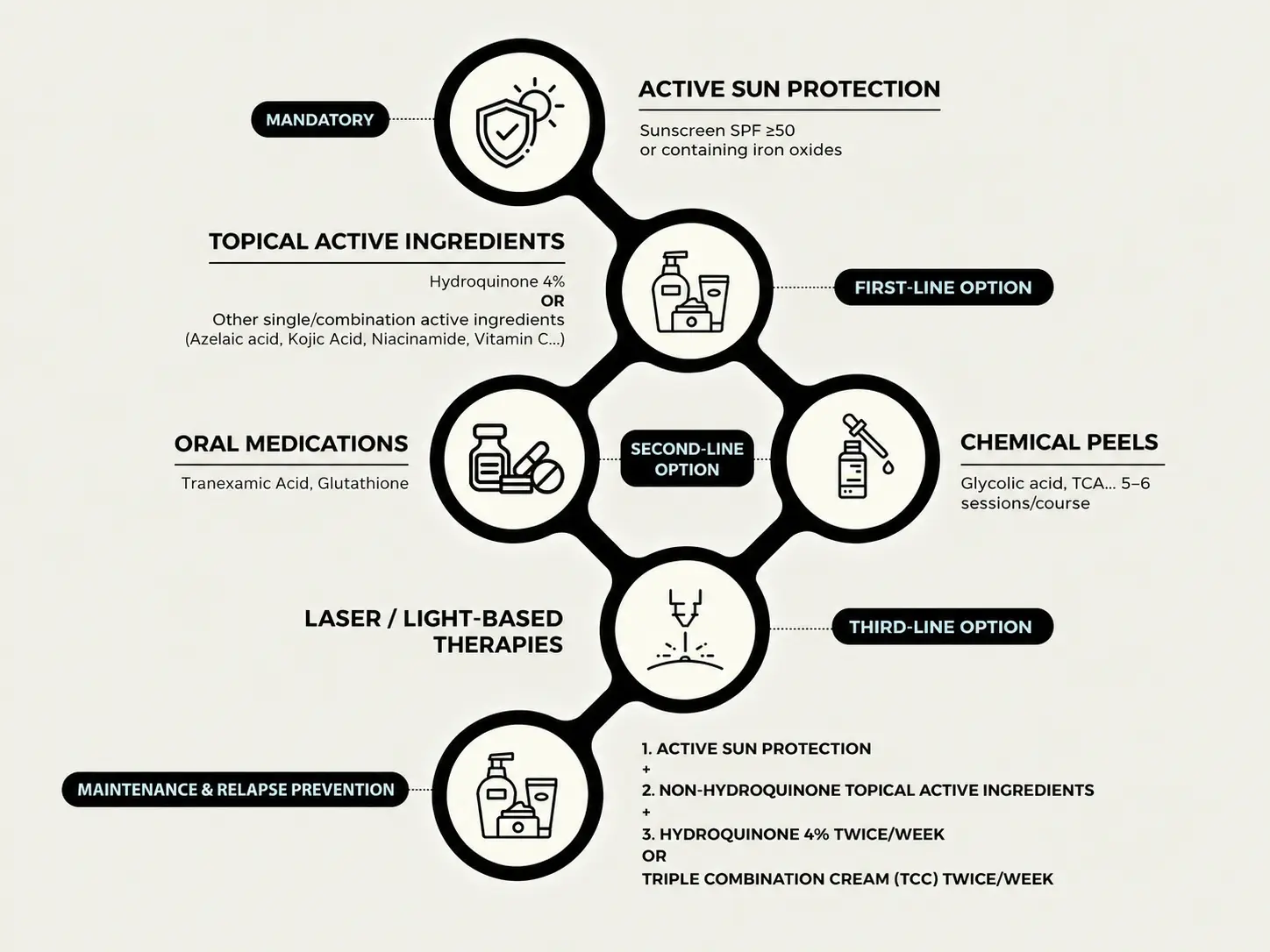
Top At-Home Actives for Melasma Compared
Here is an overview of evidence-based brightening ingredients safe for OTC home use:
| Active Ingredient | Mechanism | Recommended OTC Strength | Typical Timeline | Best For |
|---|---|---|---|---|
| Azelaic Acid | Inhibits tyrosinase & targets hyperactive melanocytes | 10% | 8 – 12 weeks | Sensitive & acne-prone skin |
| Vitamin C (L-Ascorbic Acid) | Neutralizes free radicals & slows melanin synthesis | 10% – 15% | 6 – 12 weeks | Morning antioxidant defense |
| Niacinamide (Vitamin B3) | Prevents melanosome transfer to skin cells | 2% – 5% | 4 – 8 weeks | Barrier support & redness |
| Alpha Arbutin | Gradual, stable tyrosinase inhibitor | 1% – 2% | 8 – 12 weeks | Uneven skin tone |
Clinical data indexed on National Center for Biotechnology Information confirms that pairing targeted topical inhibitors with dedicated sun protection can significantly reduce the Melasma Area and Severity Index (MASI) within 12 weeks.
Tips to Prevent Melasma From Returning
- Choose tinted physical sunscreens: Iron oxides in tinted sunscreens offer extra defense against visible light, which is known to trigger melasma.
- Wear UPF accessories: Broad-brimmed hats and UV-rated sunglasses provide essential physical shielding.
- Avoid aggressive physical scrubs: Friction and chemical burning can worsen hyperpigmentation in melasma-prone skin.
- Support internal health: Stay hydrated and eat antioxidant-rich foods like leafy greens, citrus, and berries.
Frequently Asked Questions
Can melasma be cured permanently at home?
Melasma is a chronic skin condition, meaning it cannot be permanently “cured.” However, you can significantly fade existing patches and keep them in remission with consistent sun protection and brightening skincare.
Is it safe to treat melasma at home if I have sensitive skin?
Yes. If your skin is easily sensitized, begin with gentle actives like 2% Niacinamide or 10% Azelaic Acid applied 2-3 times weekly, patch-testing beforehand to avoid irritation.
Will pregnancy-related melasma go away on its own?
Melasma triggered by pregnancy (chloasma) often fades gradually in the months following delivery as hormone levels stabilize. Daily sunscreen remains crucial during and after pregnancy to prevent lingering discoloration.